


FACE LIFT
Request A Free Consultation Or Callback
Fill out the form below, and we will be in touch shortly. Our representatives will answer you only in English.
Facelift Surgery: The Secret to Rejuvenation
For those looking to combat the signs of aging and achieve a younger, more vibrant appearance, facelift surgery offers an effective solution. Over time, gravity, the sun’s harmful effects, stress, and genetic factors can lead to sagging skin, wrinkles, and volume loss on our faces. A facelift aims to eliminate these signs of aging, giving you a fresh and rested look.
What is Facelift Surgery?
?
Facelift surgery is a surgical procedure that involves reshaping the sagging skin and underlying tissues of the face and neck. This operation addresses deep wrinkles, nasolabial folds (lines from the nose to the corners of the mouth), jowl sagging, and neck laxity. The goal is to achieve a natural-looking rejuvenation, avoiding a tight or “pulled” appearance.
Who Can Undergo a Facelift?
Facelift surgery is generally suitable for individuals who meet the following criteria:
- Good General Health: Individuals without chronic health issues or whose conditions are well-controlled.
- Realistic Expectations: Those with realistic expectations about the outcomes of the surgery, not seeking perfection.
- Noticeable Signs of Aging: Individuals experiencing skin sagging, deep wrinkles, and laxity in the jawline and neck.
Benefits of Facelift Surgery
- Rejuvenated Appearance: Eliminates sagging in the face and neck, providing a younger and more vital expression.
- Reduced Wrinkles: Significantly minimizes the appearance of deep wrinkles and lines.
- Defined Jawline: Reshapes the jawline, creating a sharper and more aesthetic chin profile.
- Increased Self-Confidence: The positive change in physical appearance boosts one’s self-confidence.
- Long-Lasting Results: When performed with the correct techniques, the results can last for many years.
Frequently Asked Questions About Face Lift
The surgery can take between 3 to 6 hours, depending on the scope and method applied.
Most patients can return to their daily activities and work within 2-3 weeks. Full recovery and final results may take several months.
The results of the surgery can last for many years, but the aging process continues, so your skin will naturally continue to change over time. While results vary from person to person, they can generally be effective for 10-15 years.
Incisions are typically placed in discreet areas such as in front of the ear, behind the ear, and within the hairline. Although noticeable initially, they fade over time, becoming less visible.
Since the surgery is performed under general anesthesia, you will not feel any pain during the procedure. There might be mild to moderate pain after the surgery, but it can be easily controlled with painkillers.
Swelling and bruising vary from person to person, being most intense during the first few days and generally significantly reducing within 2-3 weeks.
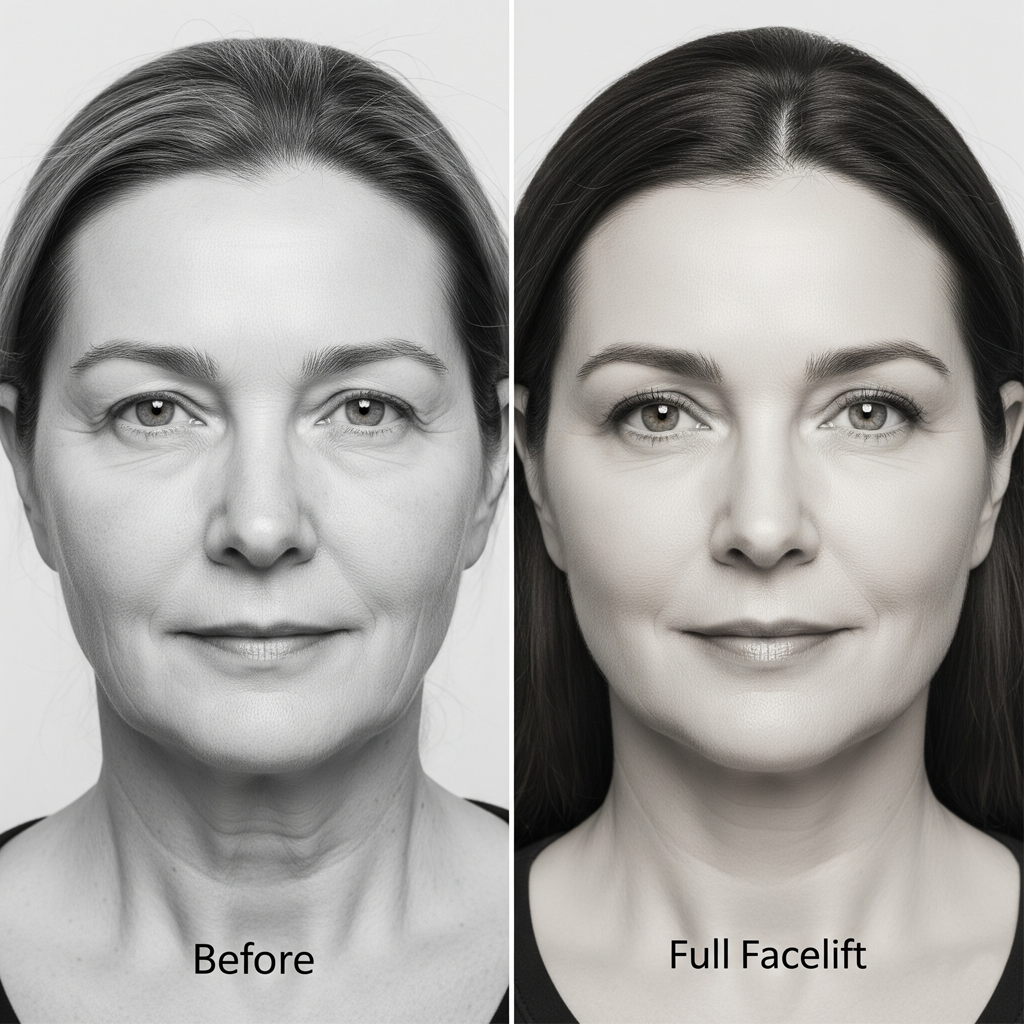
Your Tailored Face Lift Options
Facelift surgeries can be performed using various methods, tailored to the patient’s needs and degree of aging:
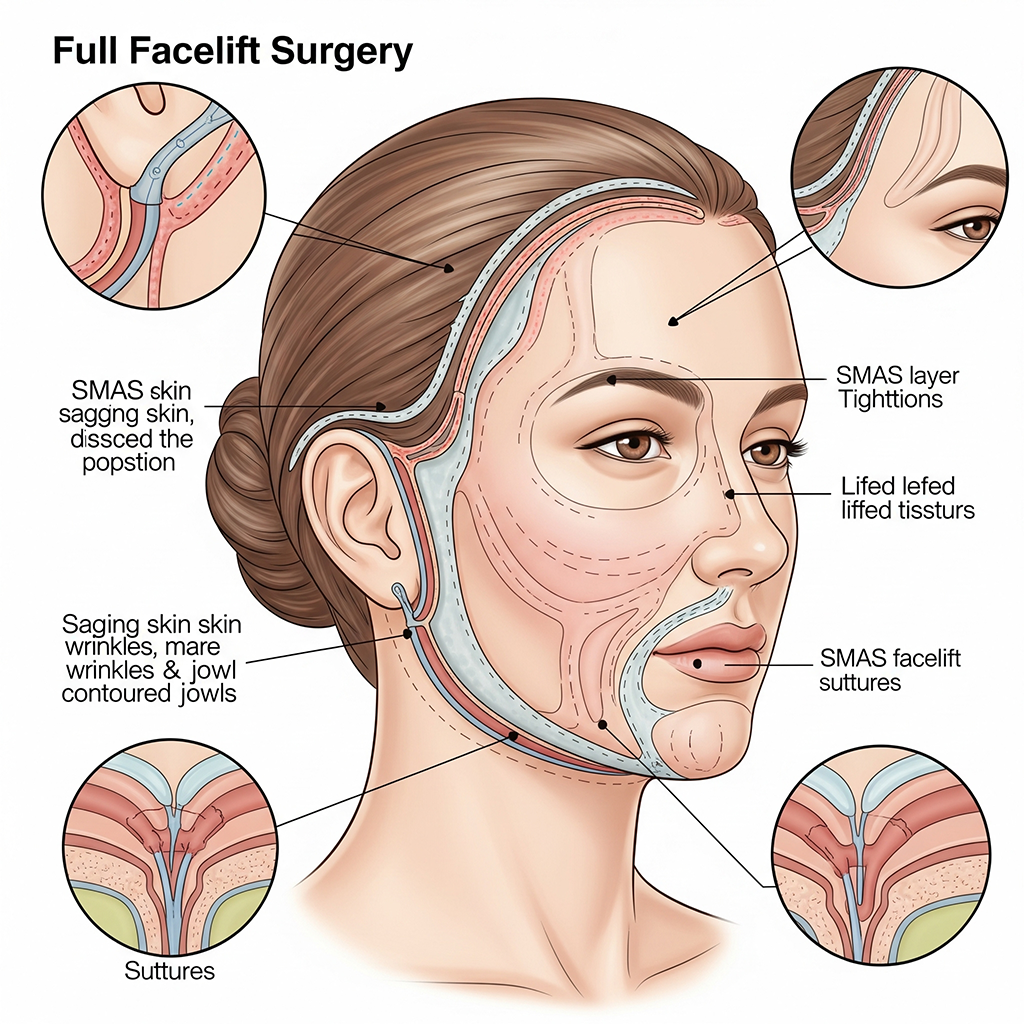
1. Traditional Facelift (Full Facelift)
This is the most comprehensive method, involving incisions that start in front of the ear, extend into the hairline, and continue behind the ear. With this technique, the skin and underlying tissues (SMAS layer) are lifted upwards, and excess skin is removed. It’s ideal for significant sagging in the face and neck.
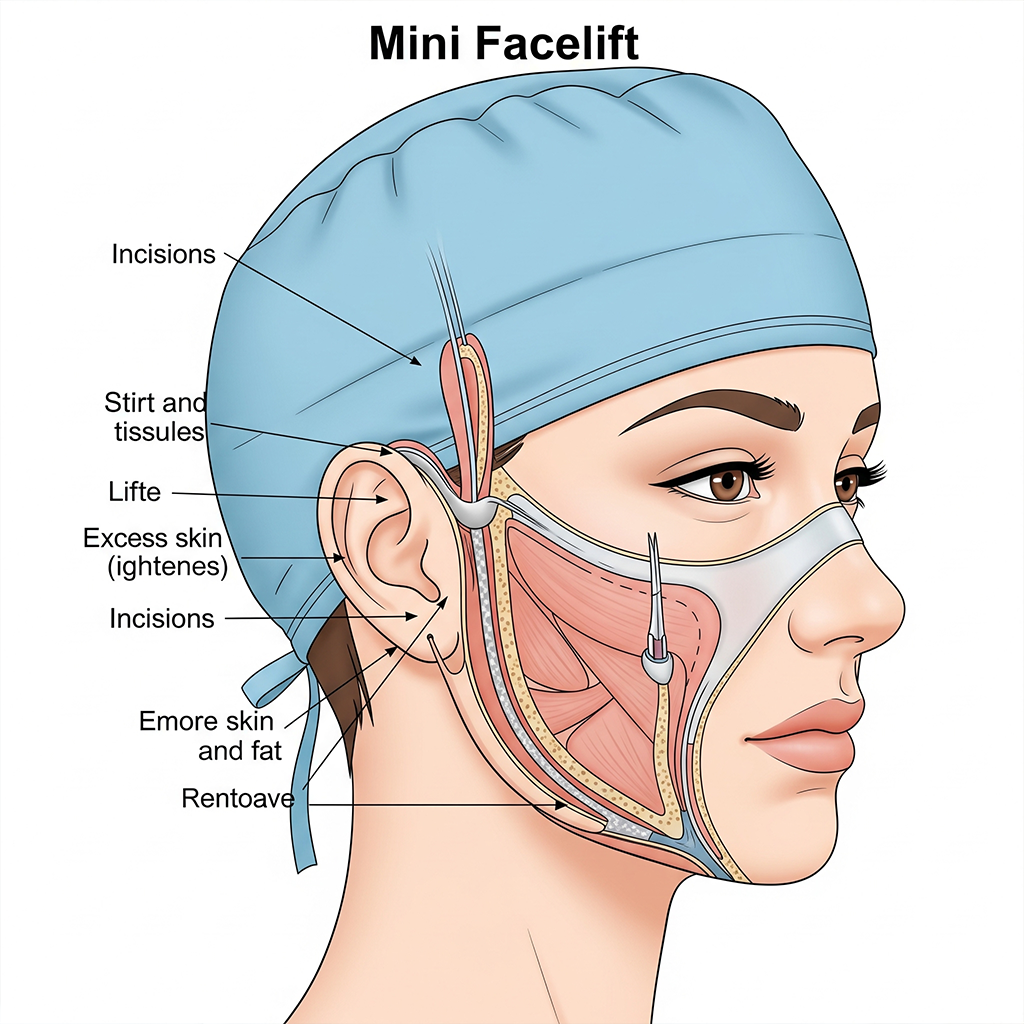
2. Mini Facelift (Mini Facelift)
Performed with smaller incisions, typically in front of the ear or within the hairline. It’s suitable for mild to moderate sagging in the middle and lower parts of the face. The recovery period is shorter.
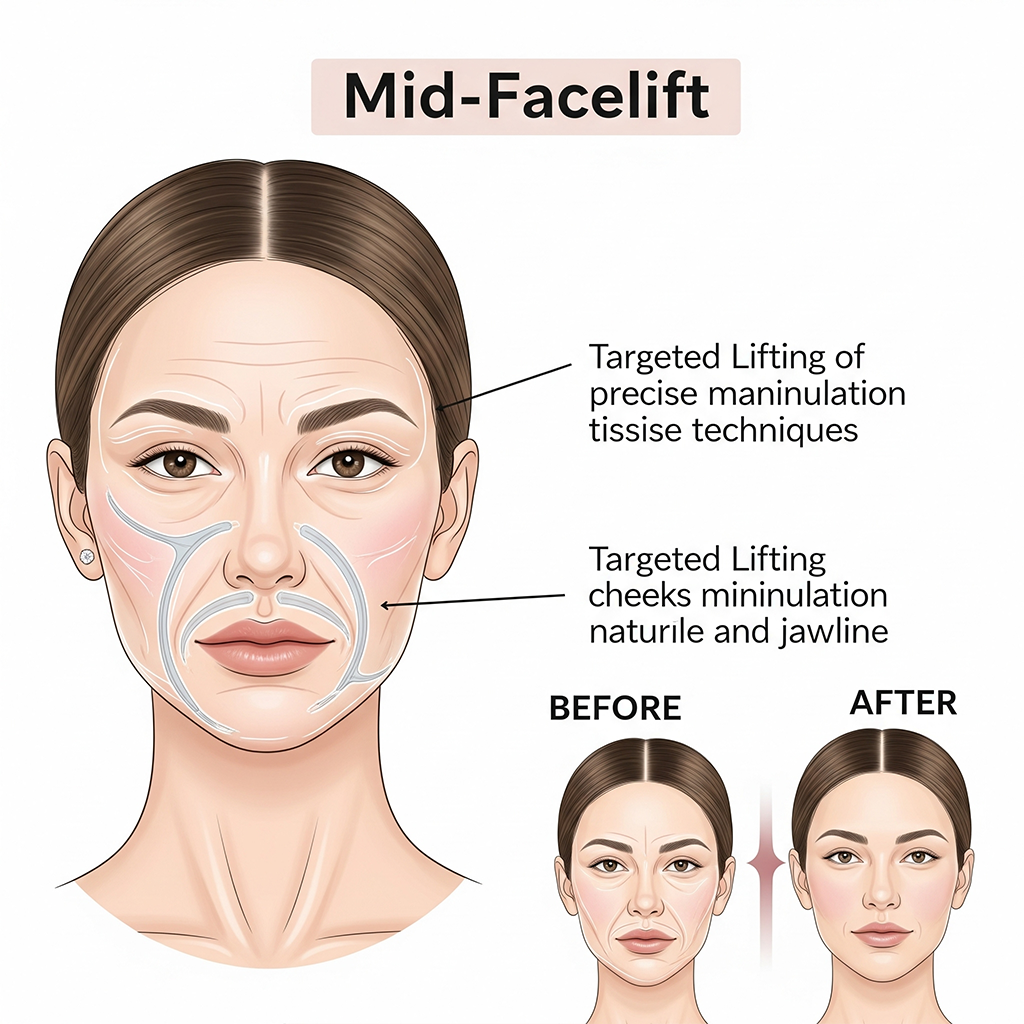
3. Mid-Face Lift
Primarily targets sagging in the under-eye and cheek areas. It can also be performed endoscopically, often through small incisions in the lower eyelid or inside the mouth.
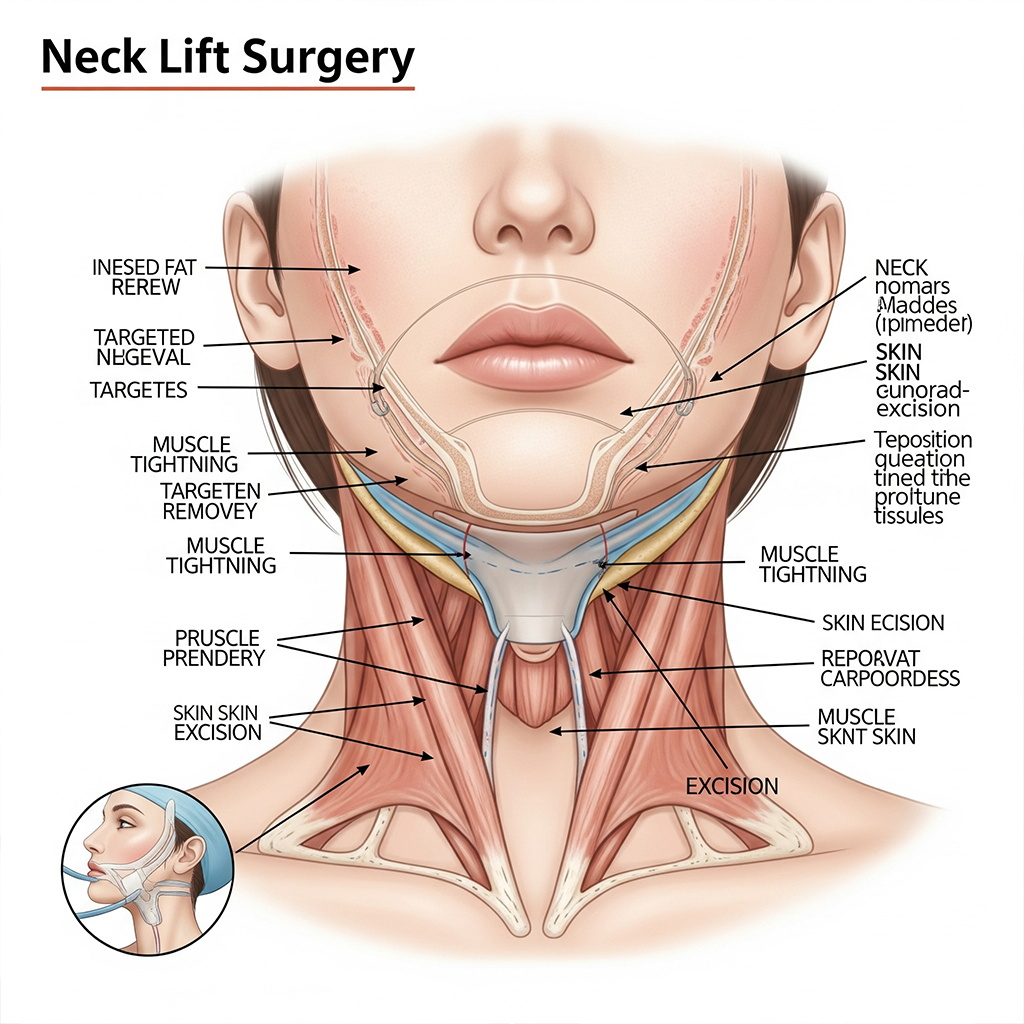
4. Neck Lift
A procedure designed to address sagging and banding in the area under the chin and on the neck. It’s often performed in conjunction with a facelift but can also be done as a standalone procedure.
| Feature | Information |
| Surgery Duration | 3 to 6 hours (Varies depending on method and scope) |
| Anesthesia Type | General Anesthesia |
| Hospital Stay | 1 night |
| Stay in Turkey | 7 to 10 days |
| Return to Social Life | 2 to 3 weeks |
| Full Recovery | 3 to 6 months |
| Surgical Scars | Remain in hidden areas like in front of/behind the ear, hairline. |
| Duration of Results | 10 to 15 years (Varies by individual and lifestyle) |
| Post-Surgery Pain | Mild to moderate (Can be controlled with painkillers) |
| Drain Usage | Generally yes (Stays for a few days) |
| Bandage/Garment | Yes (Used for a few days or weeks) |
Risks and Potential Side Effects of Face Lift
Like any surgical procedure, facelift surgery carries certain risks and potential side effects:
Infection: Although rare, there is a risk of infection in the surgical area.
Bleeding and Hematoma: Blood accumulation under the skin (hematoma) can occur and may require additional intervention.
Nerve Damage: In very rare cases, temporary or permanent damage to facial nerves can occur, leading to weakness or paralysis of facial muscles.
Asymmetry: Slight asymmetries may occur between the two sides of the face.
Poor Scar Healing: Scarring can be noticeable or thick, though this is rare.
Numbness or Loss of Sensation: Temporary or permanent numbness may occur in the surgical area.
To minimize these risks, choosing an experienced surgeon and meticulously following pre- and post-operative instructions are crucial.
Pre-Treatment Process
- Detailed Consultation: You will have a thorough discussion with your surgeon about your expectations, medical history, and the potential outcomes of the surgery.
- Physical Examination: Your surgeon will evaluate your facial and neck structure to determine the most suitable method for you.
- Blood Tests and Examinations: Necessary tests will be conducted before the surgery to check your general health.
- Medication Use: You must inform your doctor about any medications you regularly take. Blood-thinning medications may need to be discontinued before surgery.
- Smoking and Alcohol: Alcohol and tobacco consumption should be stopped at least two weeks before the surgery.
Post-Treatment Process
- First Few Days: Swelling, bruising, and mild pain are normal after surgery. Pain can be managed with painkillers. Drains are usually placed and removed within a few days.
- Bandages and Dressings: Bandages or a special compression garment will be applied to the surgical area. This helps reduce swelling.
- Rest: It’s recommended to rest with your head elevated for the first few days.
- Recovery: Bruising and swelling typically subside significantly within 2-3 weeks. Full recovery and the final results may take several months to become apparent.
- Scar Care: Surgical scars may be noticeable initially but will fade over time, becoming less conspicuous. It’s important to follow your surgeon’s scar care instructions.
- Follow-up Appointments: You will need to attend follow-up appointments at intervals determined by your surgeon.