Rhinoplasty
Request A Free Consultation Or Callback
Fill out the form below, and we will be in touch shortly. Our representatives will answer you only in English.
What is Body Rhinoplasty, and How is it Performed
?
Rhinoplasty, also known as a nose job, is a surgical procedure performed to improve the shape, size, and proportions of the nose. This surgery can address aesthetic concerns such as removing bumps on the bridge, reshaping the nasal tip, adjusting nostril size, or changing the angle of the nose, as well as correcting functional problems like breathing difficulties.
Who is suitable for rhinoplasty?
Rhinoplasty is generally suitable for individuals aged 18 and over who are dissatisfied with the appearance of their nose, experience breathing problems, or have nasal deformities after trauma. It is important for candidates to be in good general health and have realistic expectations.
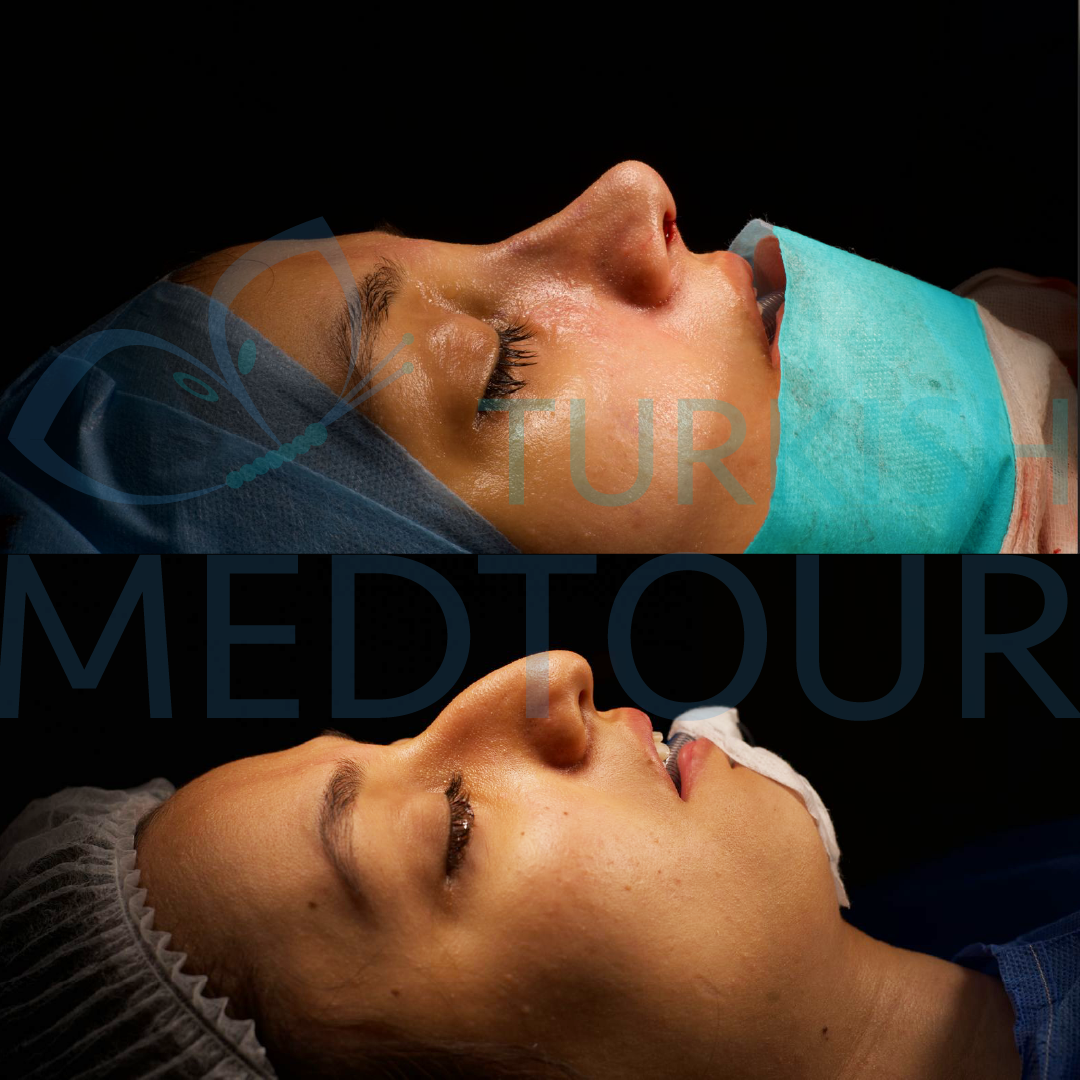
Benefits of Rhinoplasty
Aesthetic Improvement
Achieving a more proportionate and aesthetically pleasing nose appearance.
Increased Self-Confidence
A significant boost in self-confidence due to increased satisfaction with your appearance.
Improved Breathing Function
Easier breathing by correcting structural problems in the nose.
Psychological Relief
Reduction of concerns related to nasal appearance.
Frequently Asked Questions About Rhinoplasty
Mild to moderate pain is typically experienced after surgery, which can be easily managed with prescribed pain relievers. Severe pain is not expected.
In open rhinoplasty, a small, barely noticeable scar may remain between the nostrils. In closed rhinoplasty, there are no visible external scars. Once the healing process is complete, these scars usually become very inconspicuous.
Although most of the swelling in the nose subsides within the first few weeks, it can take 6 months to 1 year for the final result to fully emerge and for the nose to take its ultimate shape. This is the time required for the tissues to completely heal and settle.
It is generally recommended to avoid wearing glasses for 6-8 weeks until the nasal bones are fully healed. During this time, it may be better to use contact lenses or choose lightweight frames.
Yes, the results of rhinoplasty surgery are permanent. However, natural factors such as the aging process and gravity may cause minimal changes to the nose over time.
Which Rhinoplasty treatment do you need?
1- Ip Rhinoplasty Only
This is the least invasive and generally lowest-cost type of rhinoplasty, involving changes only to the nasal tip (cartilaginous structure). It doesn’t require intervention on the nasal bridge or bone structure.
2- Partial Rhinoplasty (Dorsal Hump or Minor Corrections)
These surgeries focus on a specific part of the nose, such as removing a dorsal hump or correcting minor asymmetries. They are less comprehensive than a full rhinoplasty.
3- Full Rhinoplasty (Comprehensive Aesthetic Corrections)
This is the standard aesthetic nose surgery, covering the overall shape, size, and proportions of the nose. It involves changes in multiple areas like the nasal bridge, tip, and nostrils.
4- Septorhinoplasty (Aesthetic and Functional)
This is a combined surgery that addresses both aesthetic concerns and internal breathing problems (e.g., deviated septum, enlarged turbinates) simultaneously. It’s the most comprehensive and generally highest-cost type of rhinoplasty.
5- Revision Rhinoplasty (Correction Surgery)
This is a corrective procedure performed after a previous rhinoplasty. It can often be more challenging and costly due to scars from the initial surgery, tissue deficiencies, or complex anatomical conditions.
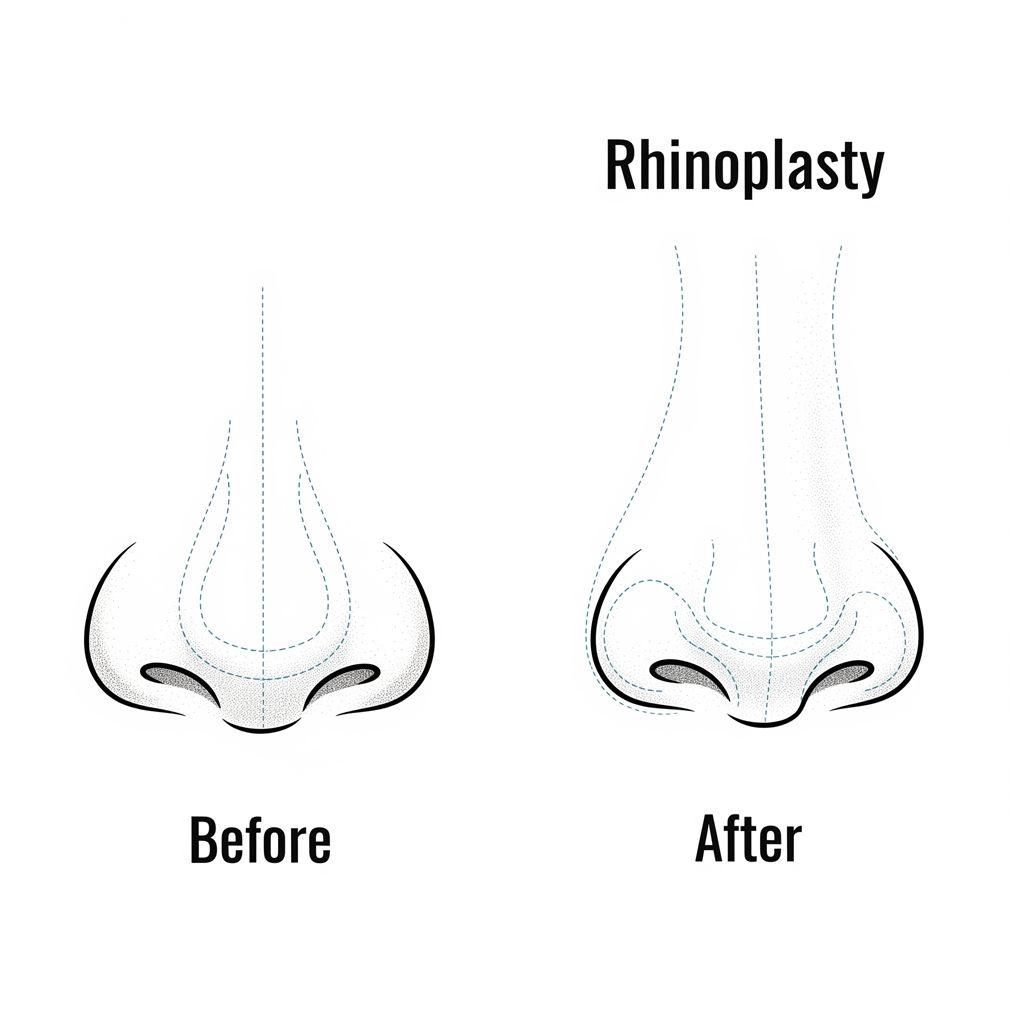
Stages of the Treatment Process
1. Pre-Treatment
Initial Consultation and Evaluation: During your first consultation with your surgeon, your expectations, nasal structure, and medical history will be thoroughly assessed. Computer-assisted simulations may be used to show you potential results.
Planning: Your surgeon will create your surgical plan, determining the most suitable nose shape for your facial proportions.
Required Tests: Blood tests and other necessary examinations will be conducted before the surgery to check your general health.
2. Treatment Process (Surgery)
Surgery Duration: Rhinoplasty surgery usually takes 2 to 4 hours, depending on the complexity of the procedure. It is performed under general anesthesia, so you will not feel any pain during the operation.
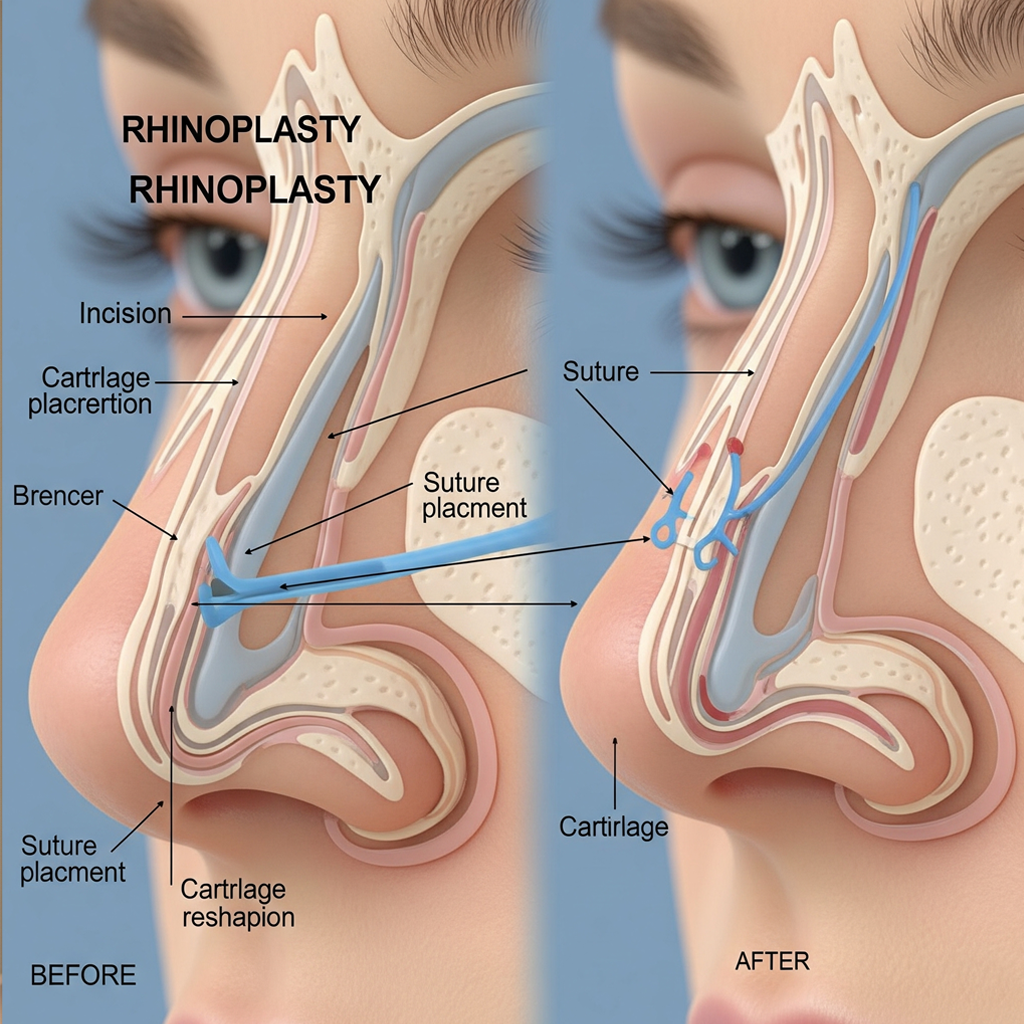
Techniques: Open or closed rhinoplasty techniques may be used. In open rhinoplasty, a small incision is made between the nostrils, while in closed rhinoplasty, all incisions are made inside the nostrils, leaving no visible external scars.
3. Post-Treatment (Hospital and Stay in Turkey)
Hospital Stay: Generally, a 1-night hospital stay is sufficient after rhinoplasty. In some cases, same-day discharge is also possible.
Duration of Stay in Turkey: It is generally recommended to stay in Turkey for 7-10 days after surgery for initial check-ups and to allow swelling to subside. During this time, your splint will be removed, and your initial follow-ups will be conducted.
4. Recovery Process
Full Recovery and Return to Routine Life: Bruising and swelling may occur during the first few days. These usually subside significantly within 1-2 weeks. Nasal bandages or splints are typically removed after one week. Full recovery and the final result can take 6 months to 1 year to settle. Most patients can return to work or daily routines 1-2 weeks after surgery. It is recommended to avoid strenuous physical activities and sports for a few weeks.
Risks of Rhinoplasty
General Surgical Risks:
– Infection
– Bleeding
– Reactions to anesthesia
– Problems with wound healing
Specific Risks Related to Rhinoplasty:
– Asymmetry
– Breathing difficulties (rare)
– Numbness or loss of sensation
– Need for revision surgery (in very rare cases)
– Changes in skin color
– Deformities in the nostrils